




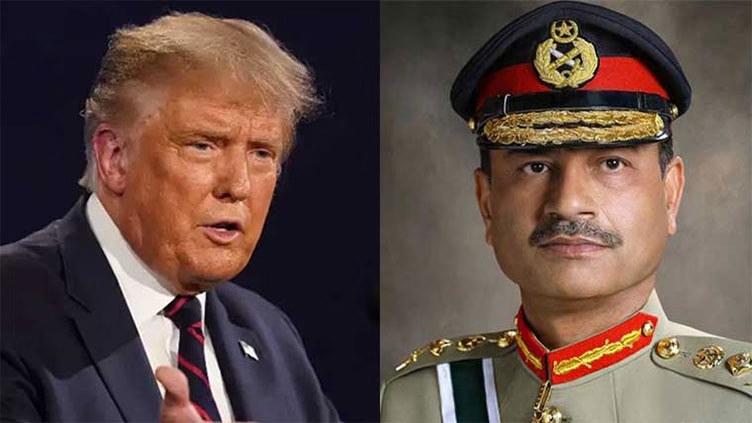
US President Donald Trump is scheduled to meet with Pakistan’s Chief of Army Staff, Field Marshal Syed Asim Munir over lunch on Wednesday, White House spokesperson said.
A White House itinerary of President Trump for Wednesday shows his lunch meeting with Field Marshal Munir.
Earlier on Monday, Field Marshal Munir interacted with the overseas Pakistani community in Washington DC as he is on an official visit to the United States.
He received a warm reception and welcome from the overseas Pakistanis, who gathered in large numbers to meet with the army chief
“The diaspora warmly appreciated the outstanding performance of the Armed Forces during Operation Bunyanum Marsoos/Marka-e-Haq, showcasing their bravery and professionalism,” the Inter Services Public Relations (ISPR) said in a press release.
Also read: Field Marshal Asim Munir meets expats in US, lauds their contribution to national economy
During the interaction, the COAS expressed his deep appreciation for the vital and most significant role being played by overseas Pakistanis for being ambassadors of Pakistan. He acknowledged their contributions to the Pakistan’s economy, and global reputation by contributing actively through remittances, investments and higher achievements in other domains.
The overseas Pakistanis shared their experiences with the army chief.
Field Marshal Munir emphasized the importance of engagement with the overseas Pakistanis, highlighting the need for continued collaboration and cooperation to address common challenges and promote cooperation.
Also Read: Kashmir is lifeline of Pakistan, says ISPR DG
The interaction concluded with a renewed sense of purpose and commitment, as the COAS and the overseas Pakistanis pledged to work together towards a more secure, prosperous, and resilient Pakistan.
It is worth noting that last month, India launched unprovoked strikes on several Pakistani cities and airbases, citing the April 22 Pahalgam incident as the reason.
Pak-India Ceasefire
Field Marshal Asim Munir’s visit to the US carries strategic importance in context of the Trump’s recent diplomatic intervention to mediate a ceasefire between Pakistan and India.
The May 10 ceasefire followed military escalation triggered by the Pahalgam incident in Indian-occupied Jammu and Kashmir, for which New Delhi accused Islamabad without presenting any supporting evidence.
The military confrontation, which continued for 87 hours, between the nuclear neighbours involved cross-border airstrikes and loss of life. In Pakistan, 40 civilians and 113 military personnel were martyred due to the Indian aggression.
Also Read: Trump again claims he brokered Pak-India ceasefire
In retaliation to Indian military actions, Pakistan launched “Operation Bunyan-um-Marsoos,” which reportedly led to the downing of six Indian Air Force jets, including three Rafale fighters.
The conflict came to a halt on May 10 after the United States successfully facilitated a ceasefire agreement.