



It was a balmy Thursday afternoon at the residential hostel of the BJ Medical College and the canteen was teeming with students getting lunch.
The room buzzed with the sound of jokes, banter between friends, and the odd bit of academic discussion.
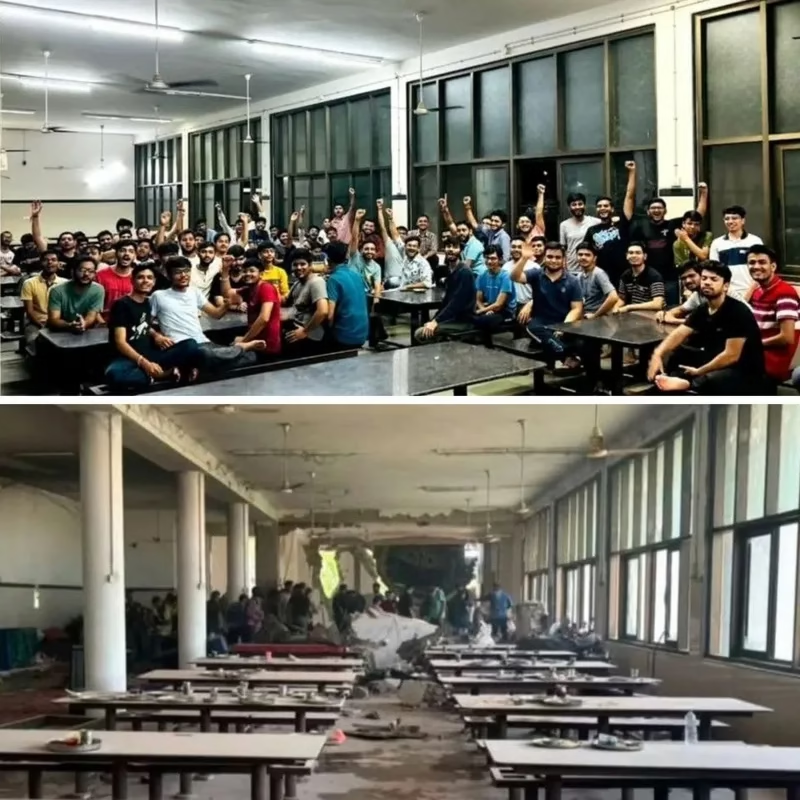
By 13:39 local time, there were at least 35 people in the cafeteria. Some had already collected their food and were lounging around, while others were in the queue waiting for their turn.
The students mixed with doctors and family members. Then, everything changed.
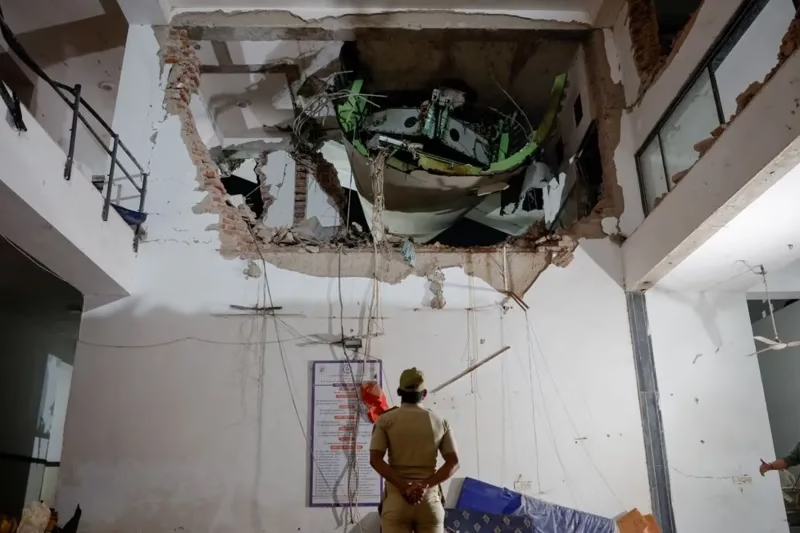
The general hum of the canteen was pierced by the sound of approaching jet engines – and then the room exploded.
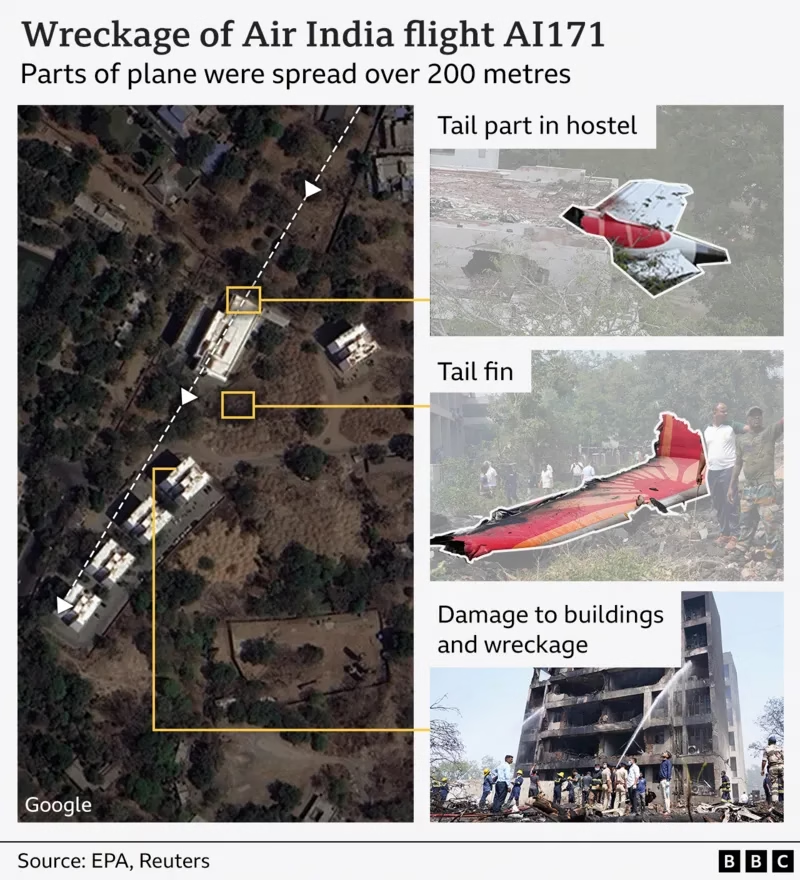
Less than a minute earlier, Flight AI171 had taken off from the runway at Ahmedabad’s airport, just 1.5km (4,800ft) away.
The Air India 787 Dreamliner was bound for London, carrying 242 people.
But something had gone catastrophically wrong, and mere seconds after its wheels left the ground, the plane was in trouble. A mayday call was sent before it came crashing down into a busy residential area – on top of the doctors’ hostel – sending a massive fireball into the sky and killing all but one person on board.
The BBC has spoken to eyewitnesses, including students who were in the hostel, along with friends of the trainee doctors who died and their teachers, to piece together what happened in those terrifying few seconds – and the aftermath that followed.People on the ground nearby couldn’t immediately work out what had happened.
A doctor, who works with the college’s kidney sciences department, says he and his colleagues were in their building, about 500 metres away, when they heard a “deafening sound” outside.
“At first, we thought it was lightning. But then we wondered, could that be possible in 40C dry heat?”
The doctors ran outside.
That’s when they heard a few people screaming: “Look, come here, a plane has crashed into our building.”
The next few minutes were a blur. Scenes of chaos descended on the campus as people ran around trying to escape – or find out what had happened.
Brothers Prince and Krish Patni were on their bikes just a few metres from the hostel when they heard the noise.
“Within seconds we could see something that resembled a wing of a plane,” Prince, 18, told the BBC.
“We rushed to the scene, but the heat from the explosion was intense and we couldn’t enter the hostel. There was a lot of debris.”
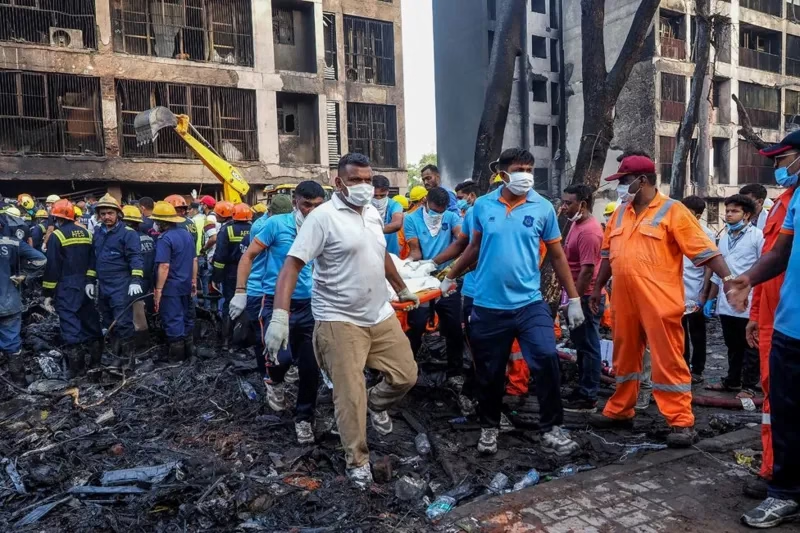
The brothers, along with a few other volunteers from the local area, waited for the heat to subside before attempting to physically enter the building. They worked together with the police to move some of the debris from the entrance.
When they finally reached the canteen, they couldn’t see anyone.
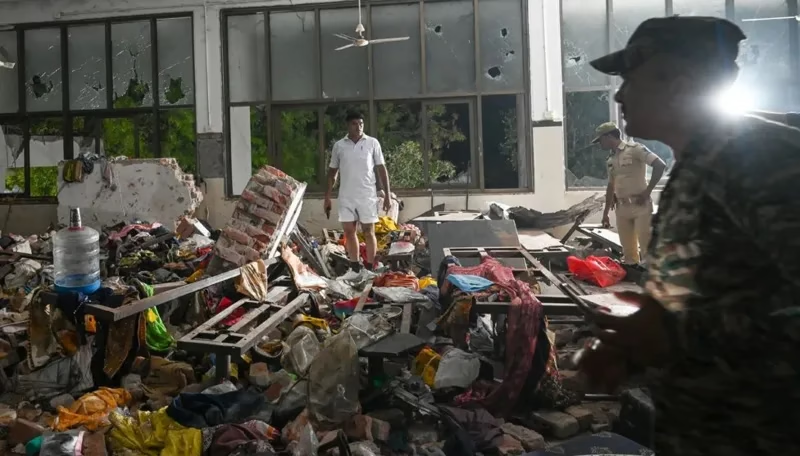
Dark, dense clouds of smoke had engulfed the room. The air smelled of burned metal. The brothers, who just minutes before had been heading to play cricket, began removing cooking gas cylinders to avoid any further explosions, Krish, 20, explained.
The brothers and other volunteers then spotted a pile of suitcases and went to move them. What unfolded next, they said, was gut wrenching.
Behind them, they began to make out the shapes of people.
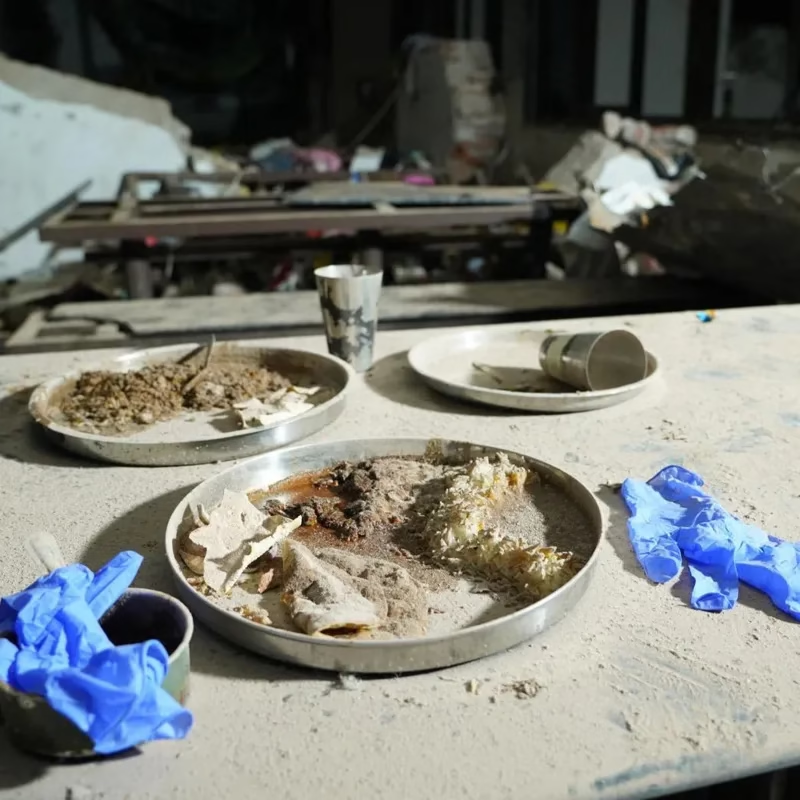
Most were alive. Some had spoons full of food in their hand, some had plates of food in front of them, and some had glasses in their hand.
They were all badly injured.
They were also silent, in shock. Just minutes before they were having their usual afternoon. Now, they were surrounded by charred metal pieces of aircraft.
“They didn’t even get a chance to react,” another doctor, who was in a nearby building, said.
The brothers, along with a few other volunteers from the local area, waited for the heat to subside before attempting to physically enter the building. They worked together with the police to move some of the debris from the entrance.
When they finally reached the canteen, they couldn’t see anyone.
Dark, dense clouds of smoke had engulfed the room. The air smelled of burned metal. The brothers, who just minutes before had been heading to play cricket, began removing cooking gas cylinders to avoid any further explosions, Krish, 20, explained.
The brothers and other volunteers then spotted a pile of suitcases and went to move them. What unfolded next, they said, was gut wrenching.
Behind them, they began to make out the shapes of people.
Most were alive. Some had spoons full of food in their hand, some had plates of food in front of them, and some had glasses in their hand.
They were all badly injured.
They were also silent, in shock. Just minutes before they were having their usual afternoon. Now, they were surrounded by charred metal pieces of aircraft.
“They didn’t even get a chance to react,” another doctor, who was in a nearby building, said.
Just a few kilometres away was Ravi Thakur, who worked in the hostel kitchen. He had gone out to deliver lunch boxes in other hostels around the city. His wife and their two-year-old daughter stayed behind as usual.
When he heard the news, he rushed back but found utter chaos. Around 45 minutes had passed and the place was full of locals, firefighters, ambulance workers and Air India staff.
He tried to look for his wife and child but couldn’t find them.
Back at the main hospital block, teachers are still trying make sense of the chaos.
“I used to teach these students and knew them personally. The injured students are still being treated in the hospital, and they are our priority at the moment,” one professor at the college told the BBC.
Meanwhile, Ravi Thakur is still searching for his loved ones, even as his hopes fade fast.