

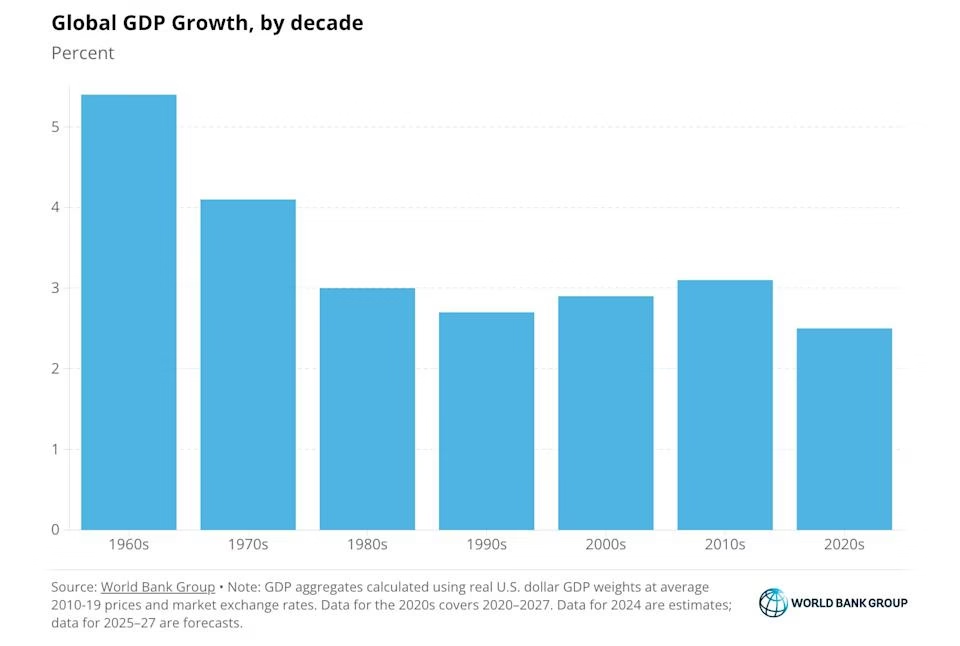
- The World Bank warns the 2020s may see the weakest economic growth since the 1960s.
- The organization cites tariffs as a major factor that could hinder global GDP growth.
- Restoring trade relations, reducing fiscal deficits, and boosting employment are key to raising growth.
The 2020s could be the weakest decade for economic growth since the 1960s, the World Bank said in a report on Tuesday.
The culprit for the potential bout of sluggish expansion? Tariffs, the organization said.
“Only six months ago, a ‘soft landing’ appeared to be in sight: the global economy was stabilizing after an extraordinary string of calamities both natural and man-made over the past few years. That moment has passed,” wrote World Bank Chief Economist Indermit Gill and Deputy Chief Economist M. Ayhan Kose in the report.
The economists continued: “This year alone, our forecasts indicate the upheaval will slice nearly half a percentage point off the global gross domestic product (GDP) growth rate that had been expected at the start of the year, cutting it to 2.3 percent. That’s the weakest performance in 17 years, outside of outright global recessions. By 2027, global GDP growth is expected to average just 2.5 percent in the 2020s—the slowest pace of any decade since the 1960s.”
Gill and Kose laid out three ways to boost growth from current projections. One would be to restore trade relations. Global GDP this year and next would be 0.2% higher if tariffs dropped by half from their May 2025 levels, the economists said.
Second, governments need to rein in fiscal deficits.
“In the era of easy money that preceded the COVID-19 pandemic, governments opted to take too many risks for far too long,” Gill and Kose wrote. “The bill is now due: fiscal deficits so far in the 2020s have averaged nearly 6 percent in developing economies, the highest level of this century. Interest costs alone account for about a third of the deficits.”Finally, governments, particularly those in developing economies, should focus on job growth. Working-age populations in regions like South Asia and sub-Saharan Africa are expected to rise by hundreds of millions, the economists said.
The World Bank joins the Organization for Economic Co-operation and Development in dropping GDP forecasts. OECD now sees 1.6% growth in the US in 2025 instead of 2.6%.
Federal Reserve forecasts for US GDP growth are also lackluster. The central bank’s Federal Open Market Committee sees a median of 1.7% growth in 2025 and 1.8% growth in the “long run,” though the projections were made before many of Trump’s tariff proposals.